Agentic AI & Automation
AI Governance & Trust Plane
The layer that decides what AI may touch, what it may do, and what it must prove afterwards.
Trusted Partners
Why programmes stall here
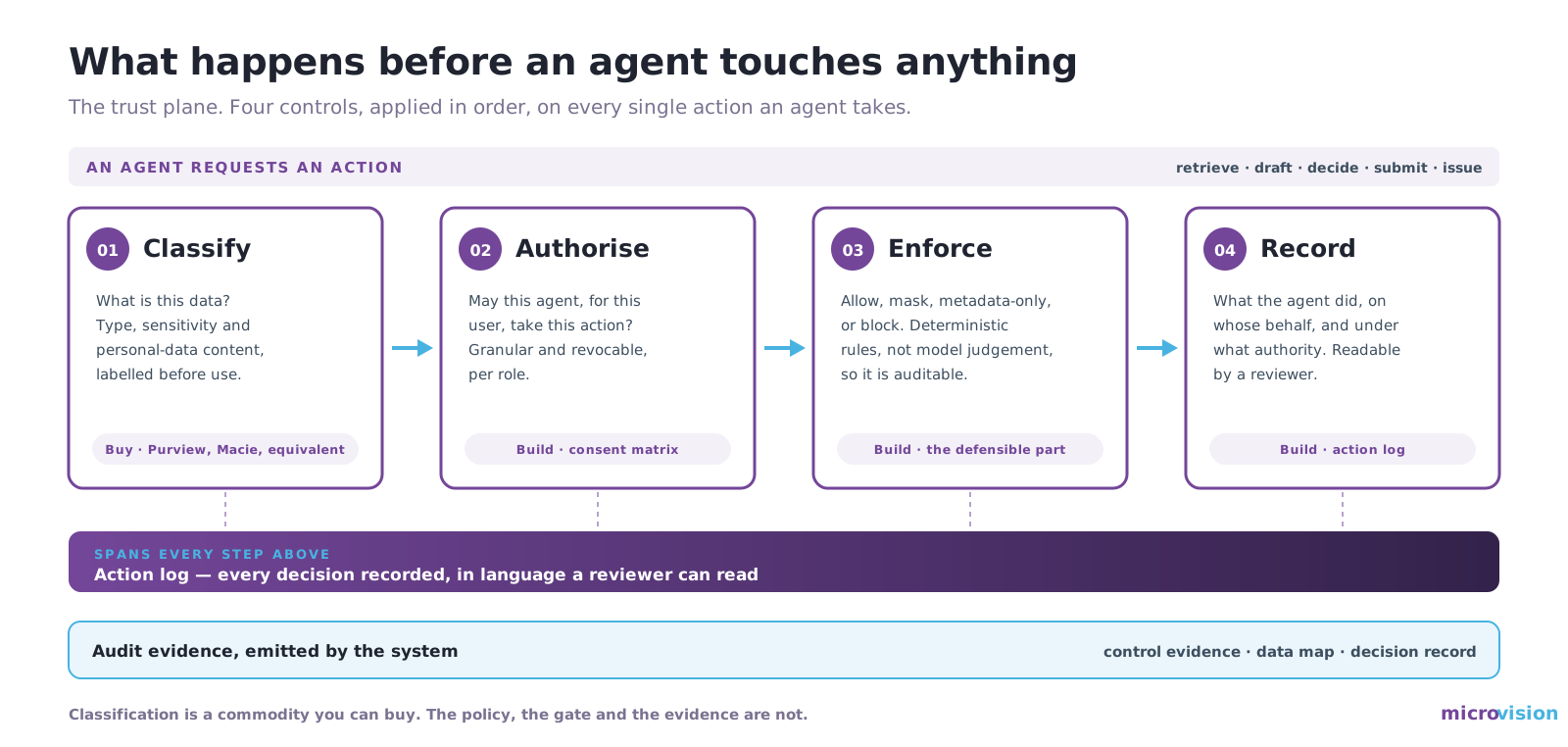
An AI trust plane is the control layer that governs every action an agent takes: it classifies the data before the agent reaches it, authorises what the agent may do, enforces that decision deterministically, and records what happened. Most agentic AI programmes discover governance at the end, when a security review asks what the agent is permitted to do and who approved it. By then the architecture already assumes the agent can reach everything. Retrofitting control at that point is expensive, and it is the most common reason a working pilot never reaches production.
01
The AI trust plane
02
Four controls, applied in sequence
03
Evidence as a by-product, not a documentation exercise
04
How we differ
05
Frequently asked questions
Rethink What's Possible with Cloud Services